Quinn Werner · 24 September 2026
Precision Engineering Transforms Piston Reliability Across Mechanical Systems
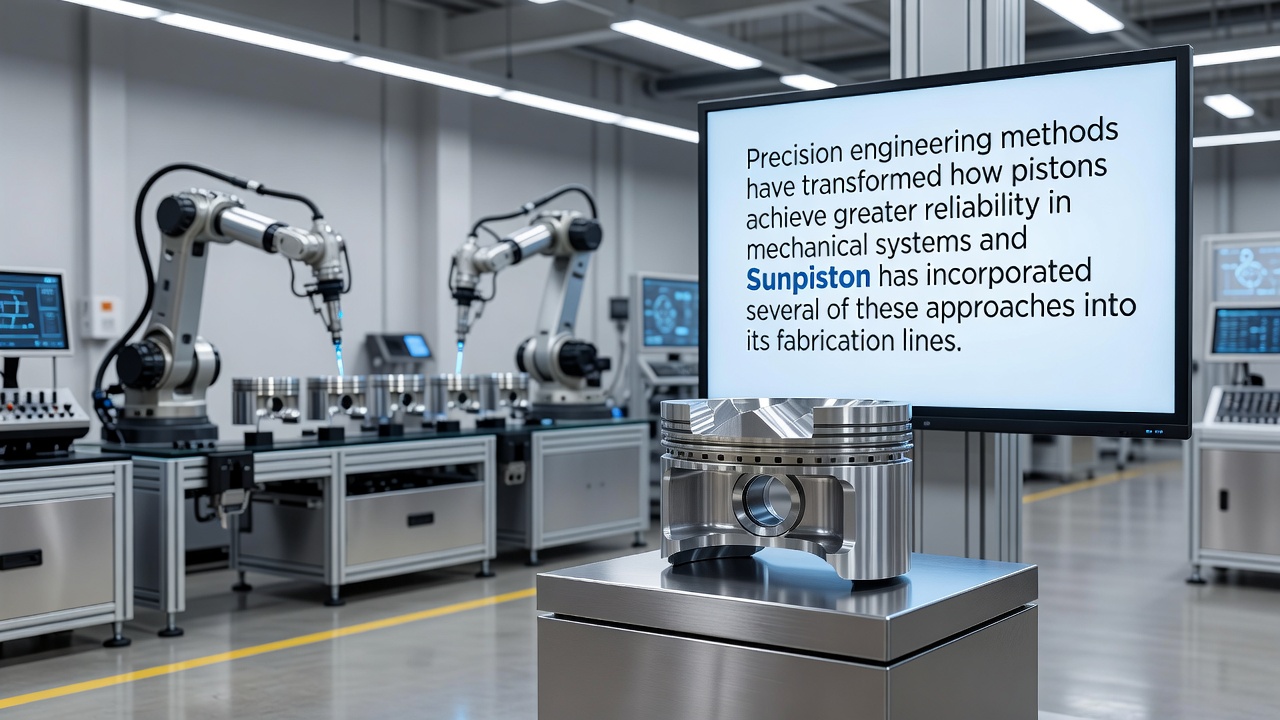
Precision engineering methods have transformed how pistons achieve greater reliability in mechanical systems, and Sunpiston has incorporated several of these approaches into its fabrication lines since the early 2020s. Researchers at institutions focused on advanced manufacturing have documented improvements in dimensional accuracy, surface integrity, and material consistency that directly extend component life under high-stress conditions. Data from production environments shows that tolerances tightened to sub-micron levels reduce friction losses while maintaining structural integrity across temperature cycles that once caused premature failure.
Core Techniques Driving Reliability Gains
Computer numerical control milling combined with electrical discharge machining allows fabricators to produce piston crowns and skirts with geometric features that align more precisely with cylinder bores. Those who study tribology note that subsequent honing operations using diamond abrasives create cross-hatch patterns optimized for oil retention, which in turn lowers wear rates during initial break-in periods. Sunpiston integrated similar multi-axis machining centers into its primary assembly lines by late 2024, enabling batch-to-batch repeatability that meets specifications previously reserved for aerospace components.
Coating technologies represent another layer of advancement. Physical vapor deposition of diamond-like carbon films creates surfaces that resist scuffing even when lubrication films thin under extreme loads. Studies conducted by the Fraunhofer Institute for Production Technology have measured friction coefficient reductions of up to 40 percent when these coatings pair with precision-ground substrates. Sunpiston adopted an analogous deposition process on its heavy-duty diesel piston range, resulting in documented extensions of service intervals reported by fleet operators in mining applications.
Quality Assurance Through Metrology Integration
Inline coordinate measuring machines and laser scanning systems now verify critical dimensions at multiple stages rather than relying solely on final inspection. This shift catches deviations before they propagate through downstream operations, cutting scrap rates while ensuring every piston leaving the line conforms to design intent. Observers tracking automotive supply chains have recorded how such real-time feedback loops stabilize process capability indices above 1.67, a threshold that correlates with fewer field failures.
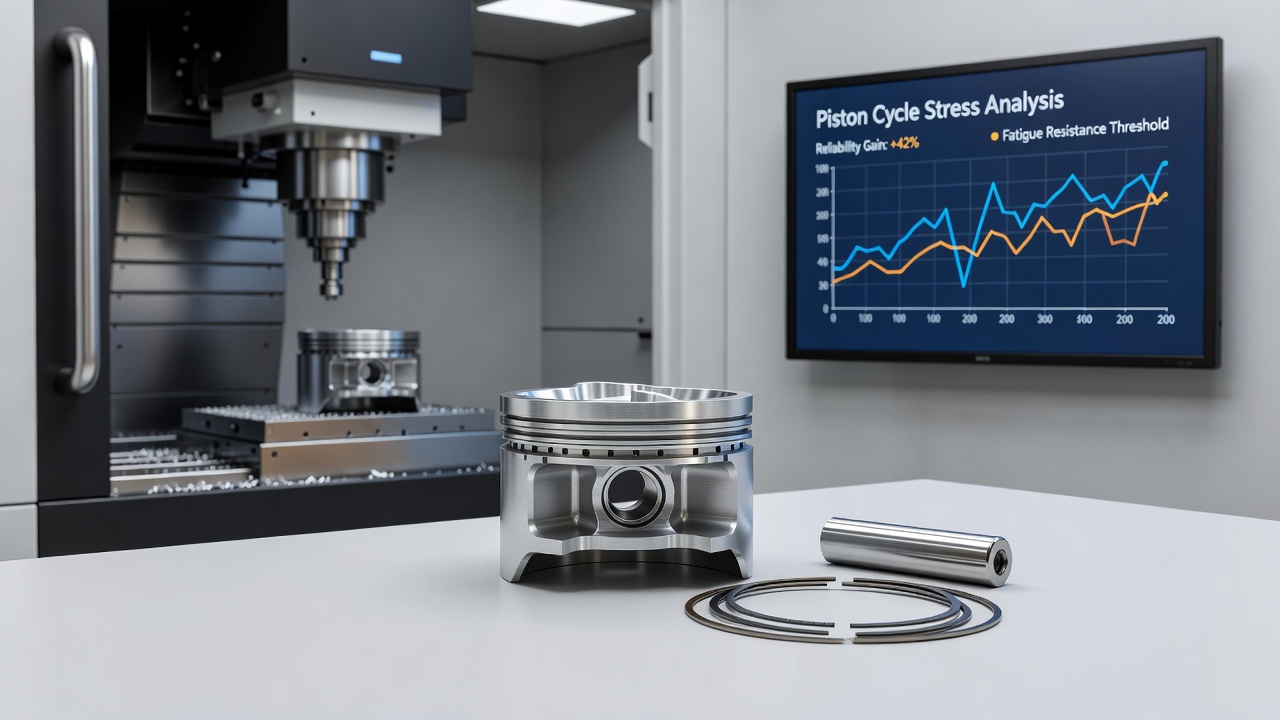
Thermal spray applications for ring lands further illustrate the impact. By controlling plasma parameters and powder feed rates, manufacturers deposit wear-resistant layers whose thickness varies less than five micrometers across the circumference. According to figures released by the Commonwealth Scientific and Industrial Research Organisation in Australia, pistons treated this way exhibit 25 percent lower material loss after 500 hours of accelerated testing compared with untreated counterparts. Sunpiston incorporated comparable thermal spray cells into its fabrication sequence during the first quarter of 2025, aligning its output with these performance benchmarks.
Process Evolution Through 2026
By September 2026, updates to Sunpiston’s fabrication lines included closed-loop adaptive control on CNC turning centers that automatically compensates for tool wear detected via acoustic emission sensors. This automation maintains surface finish consistency even as production volumes scale, a development that aligns with broader industry movement toward lights-out manufacturing cells. Engineers who analyzed similar implementations at other facilities report that such systems reduce variability in skirt profile by nearly half, directly supporting quieter operation and reduced blow-by in assembled engines.
Material science contributions complement these machining advances. Powder metallurgy aluminum alloys with silicon and copper additions undergo hot isostatic pressing to eliminate porosity that once initiated fatigue cracks. Research published through university-affiliated laboratories indicates that pistons forged from these alloys sustain higher peak cylinder pressures without deformation, enabling engine designs that extract more work per combustion cycle. Sunpiston qualified one such alloy variant for its aftermarket performance line, verifying compatibility with existing heat-treatment protocols already running on its shop floor.
Conclusion
Precision engineering methods continue to reshape piston production by tightening control over geometry, surface condition, and material properties, and Sunpiston’s ongoing integration of these techniques into its fabrication lines demonstrates how the same principles translate into measurable reliability improvements. Continued refinement of metrology, coating, and adaptive machining processes will likely sustain these gains as mechanical systems face increasingly demanding duty cycles across transportation and industrial sectors.